Microbiological and Chemical Contaminants in Single-Use and Multipackage Bottled Water: Inter- and Intra-analyses of 26 Bottled Water Brands in the USA
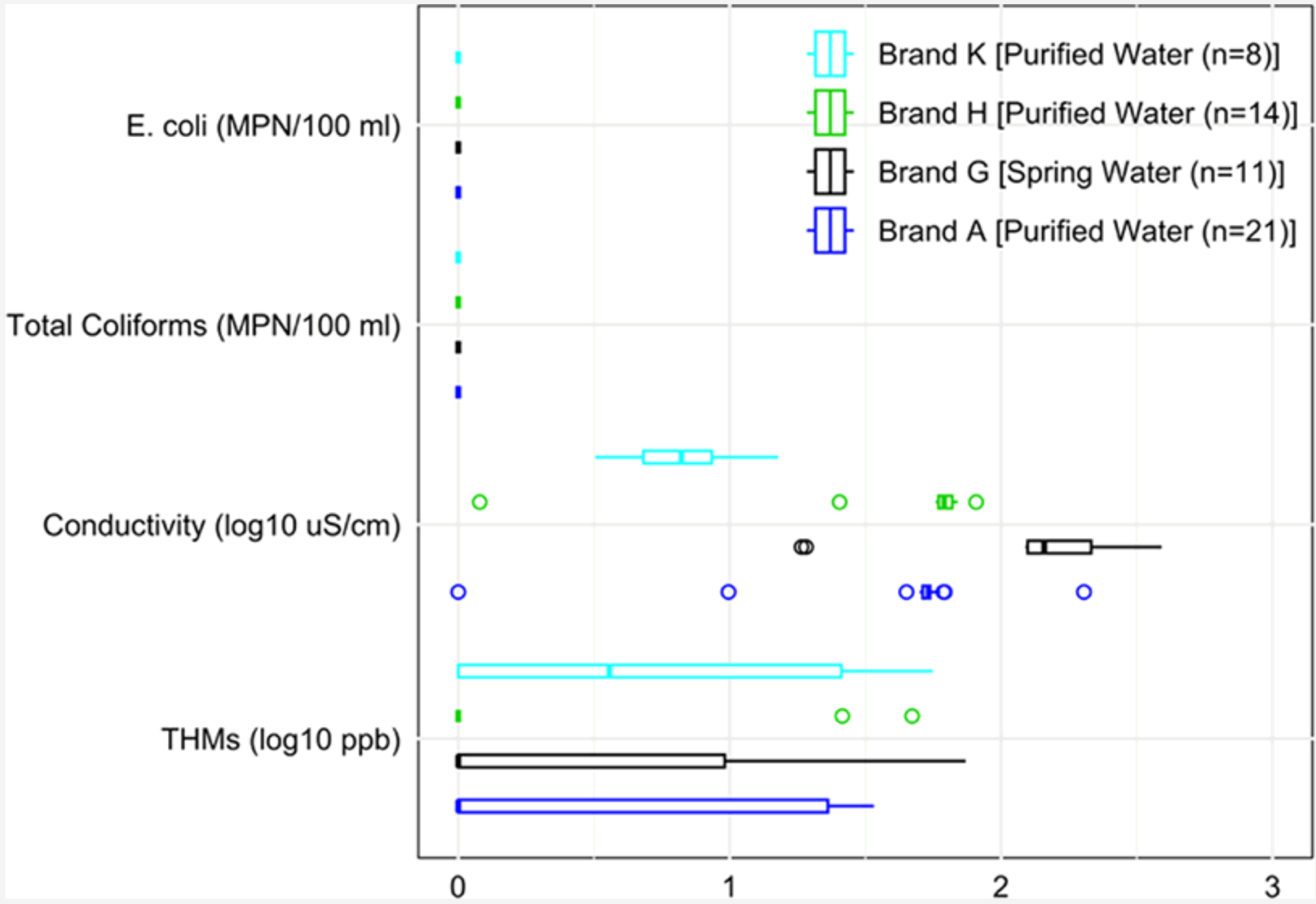
Relatively few published studies have assessed the microbiological or chemical quality of bottled water in the USA. We purchased all single and multipackage bottled water sold in grocery and retail stores in one county in Virginia. 107 samples, across 26 brands, were tested for pH, conductivity, dissolved oxygen, total coliform, E. coli, nitrate, sulfate, free chlorine, total trihalomethanes (THMs, a component of disinfection byproducts), fluoride, and heavy metals. 64.5% (n = 69) of samples were purified water and 35.5% (n = 38) were spring water. Contaminant concentrations were higher overall in spring water samples. Total coliforms and E. coli were not detected in any samples. 1.4% (n = 1) of purified bottled water samples exceeded regulatory standards for THM (80 ppb), and 7.2% (n = 5) and 10.5% (n = 4) of purified and spring samples exceeded 1/2 the THM standard, respectively. No spring water samples exceeded standards for heavy metals, but one purified bottled water sample exceeded the standard for cadmium. We observed considerable within-brand variability in concentrations for a number of parameters including THMs, calcium, silicon, and strontium. This is the first study we are aware of to analyze contaminant variability within bottled water brands. Our results indicate that monitoring and reporting requirements for bottled water should be improved.
Microbiological and Chemical Contaminants in Single-Use and Multipackage Bottled Water: Inter- and Intra-analyses of 26 Bottled Water Brands in the USA
Authors: Rasheduzzaman, M., Lytton, B., Wilcox, E., Das, A., Wirth, M., Hurtado, A., Krometis, L.-A. & Cohen, A.*
Publication Year: 2025 | Journal / Publisher: Environmental Science & Technology - Water
Relatively few published studies have assessed the microbiological or chemical quality of bottled water in the USA. We purchased all single and multipackage bottled water sold in grocery and retail stores in one county in Virginia. 107 samples, across 26 brands, were tested for pH, conductivity, dissolved oxygen, total coliform, E. coli, nitrate, sulfate, free chlorine, total trihalomethanes (THMs, a component of disinfection byproducts), fluoride, and heavy metals. 64.5% (n = 69) of samples were purified water and 35.5% (n = 38) were spring water. Contaminant concentrations were higher overall in spring water samples. Total coliforms and E. coli were not detected in any samples. 1.4% (n = 1) of purified bottled water samples exceeded regulatory standards for THM (80 ppb), and 7.2% (n = 5) and 10.5% (n = 4) of purified and spring samples exceeded 1/2 the THM standard, respectively. No spring water samples exceeded standards for heavy metals, but one purified bottled water sample exceeded the standard for cadmium. We observed considerable within-brand variability in concentrations for a number of parameters including THMs, calcium, silicon, and strontium. This is the first study we are aware of to analyze contaminant variability within bottled water brands. Our results indicate that monitoring and reporting requirements for bottled water should be improved.
PDF on Publisher Website | PDF on OSF