Fuel use trends for boiling water in rural China (1992-2012) & environmental health implications: A national cross-sectional study
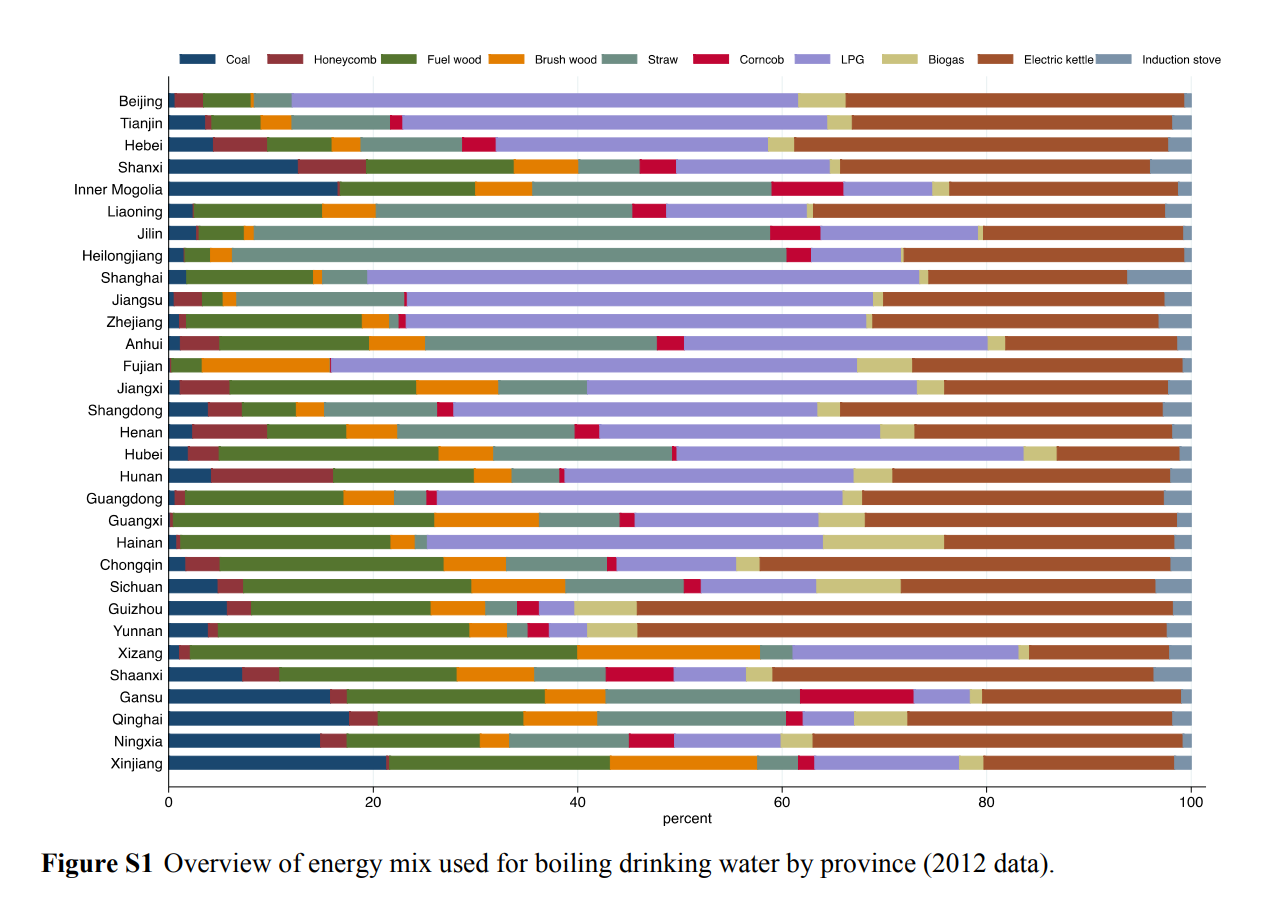 Abstract/Summary:Survey data from a comprehensive national survey of ∼34 000 households were analyzed for the mix status and transition trajectory of energy for boiling water in rural Chinese households from 1992 to 2012. In 1992, ∼6% of households reported using electricity, biogas, or liquefied petroleum gas (LPG) to boil drinking water; in 2012, the proportion was ∼60%. Income per capita appeared most strongly associated with this transition toward electricity and other clean fuels. Median annual incomes for households using biomass fuels, electric kettles, and LPG were RMB 15 000, 28 000, and 30 000, respectively. Overall, the transition was most pronounced in eastern China, a region which experienced relatively higher rates of economic growth over the same 20-year period. Energy type preferences appear to be highly dependent on fuel accessibility such that coal and straw usage was higher in provinces with higher coal and grain production. These trends suggest that electric kettle use would likely increase from ∼29% (2012) to ∼60% by 2030, at which point <5% of rural households would be expected to boil with solid fuels. Recent evidence suggests that this transition could contribute to reductions in water-related gastrointestinal illness as well as reductions in air pollutant emissions in rural China.